
Forest health
Introducing new species and provenances in response to climate change: daring or reckless?
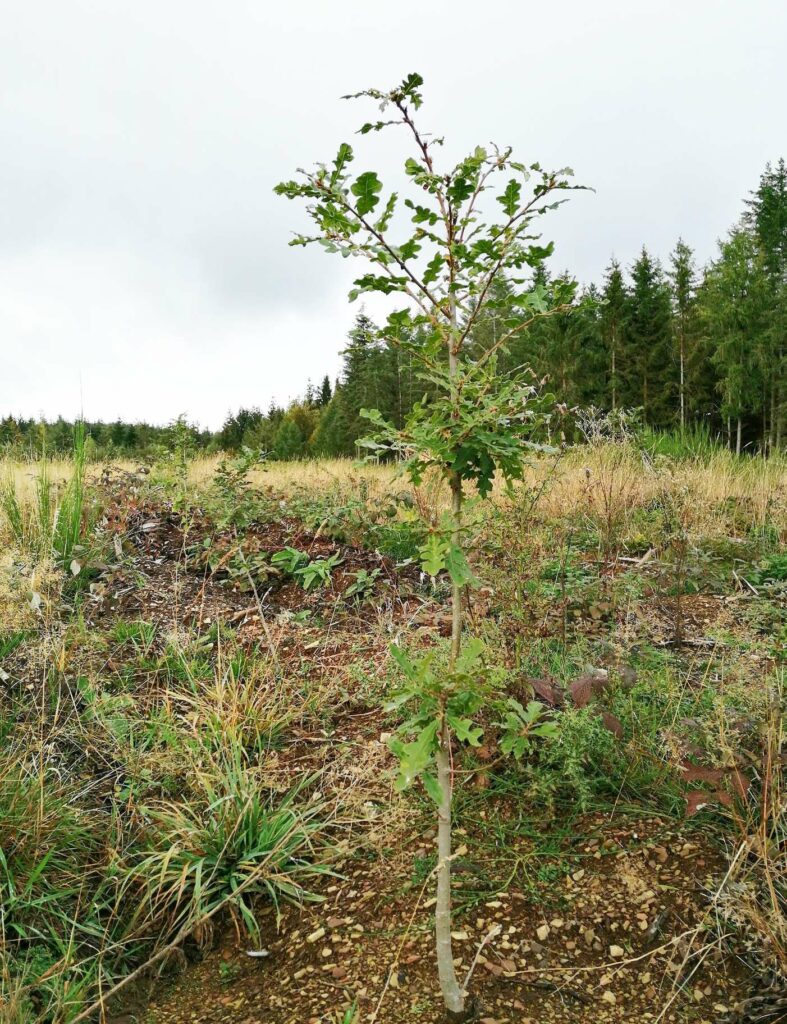

Are your forest stands showing signs of decline or phytosanitary problems?
Don't let the situation get any worse: experts can help you free of charge.
As a forest owner in Wallonia or Brussels, you can call on the correspondent-observers of the Observatoire Wallon de la Santé des Forêts (OWSF) at no cost to members, Forest health - L'Environnement en Wallonie). These specialists visit your property to carry out a full diagnosis of the problems encountered, whether they are of abiotic origin (drought, soil, climate, mechanical damage, etc.) or biotic (insects, fungi, diseases, etc.). Their analysis is accompanied by practical advice and tailored recommendations to help you manage the situation effectively and preserve the health of your forest. Don't hesitate to ask for this service: it's simple, responsive and at your disposal to support your stands over the long term.
A simple, fast and completely free service for members to help preserve the health of your stands. For non-owners or non-members: please contact us for details.
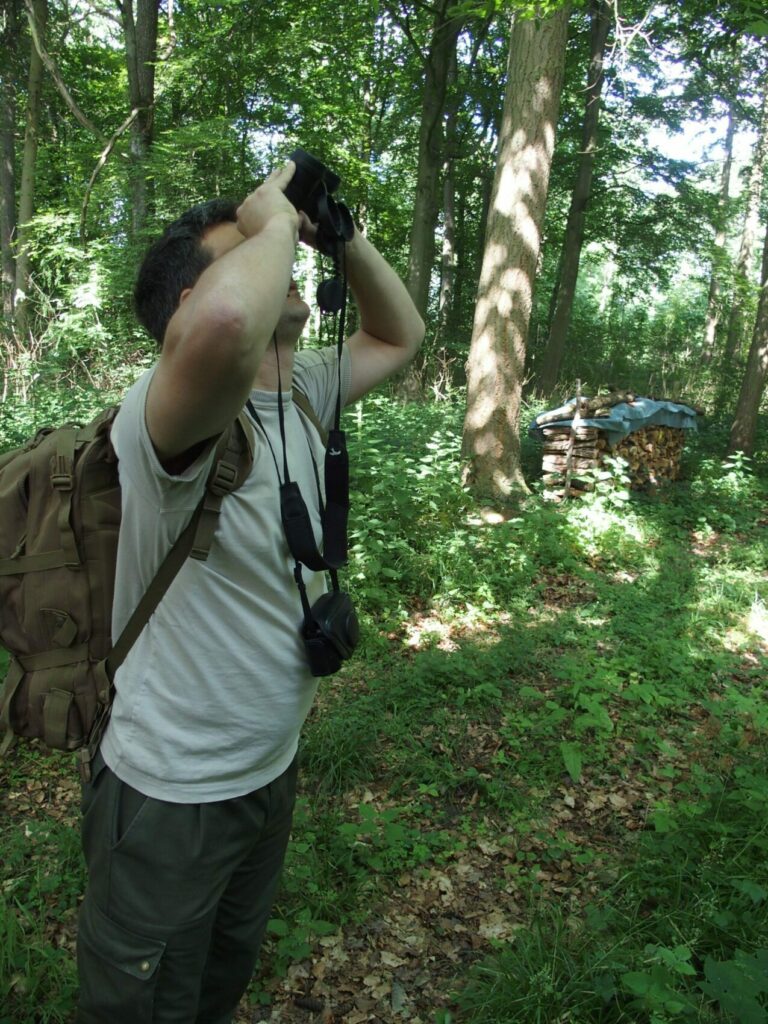
The services of the Correspondent Observers
Plantation monitoring
Have you just planted a plot? The monitoring protocols are carried out on winter plantings, on two occasions: in May-June and in October. They provide detailed monitoring of the health of future stands. The plantations concerned must comprise at least 400 plants of the same species to enable observations to be made in accordance with the OWSF protocol. Note that it is not compulsory to have a single species plantation, on the contrary. Mixed plantations are perfectly acceptable, but a minimum of 400 plants of a given species is required to enable the species to be monitored.
Short-term monitoring
Do you notice dieback or health problems in your stands but don't know what's causing them or can't identify the pathogens and/or pests responsible? A Correspondent Observer can travel to you and take the necessary observations and samples to establish a diagnosis in collaboration with the OWSF.
Regular health monitoring
If your property is larger than 50 ha, you can take out a two-year subscription for two to four visits, which will be used both to monitor specific cases and answer your questions, and to provide the OWSF with data for long-term monitoring of trends in the various forest pest problems.
As all foresters know, the life of a forest extends well beyond the life of a human being. Some observations can lead to direct and obvious conclusions, while others will only yield results over the long term and in combination with other elements of analysis.
Calling on an observer correspondent means getting help in the present and contributing to the knowledge of the future.
The chalara fraxinea
The chalara fraxinea is an ash disease caused by a microscopic fungus, Hymenoscyphus fraxineus. Formally identified on the border between Poland and Lithuania in 2006, this fungus originating in Asia was first reported in Wallonia by the Centre Wallon de Recherches Agronomiques in 2010 in an ash grove located in Hainaut.
In just a few years, all ash stands have been affected, to varying degrees depending on the age of the trees.
A research article was published in Silva Belgica (No. 5 | 2022) with an analysis of symptoms, planting prospects, identification of potentially tolerant ash trees, and a conclusion on the future of this species.
The bark beetle
Since August 2018, spruce trees have been suffering from numerous attacks by the Ips typograph (bark beetle) in our forests, mainly as a result of their weakening as a result of the drought. In 2021, the OWSF reports a sharp decline in attacks linked to typographical ips. The situation varies from region to region, but locally heavy attacks are still possible.
Any health problems in your stands?
Call on our Correspondent-Observers!
They'll come and carry out a diagnosis!
This service is free for SRFB member-owners.
For non-owners or non-members: please contact us for details.
Diane Doucet | Project Manager "MigForest" & "ForDiL"
diane.doucet@srfb-kbbm.be