
Vincent Colson (CAPFP-FBW), Louanne Collin and Nicolas Dassonville (SRFB), Méline Wilmart (Houtinfobois), Sébastien Cassart (NTF)
Quick access :
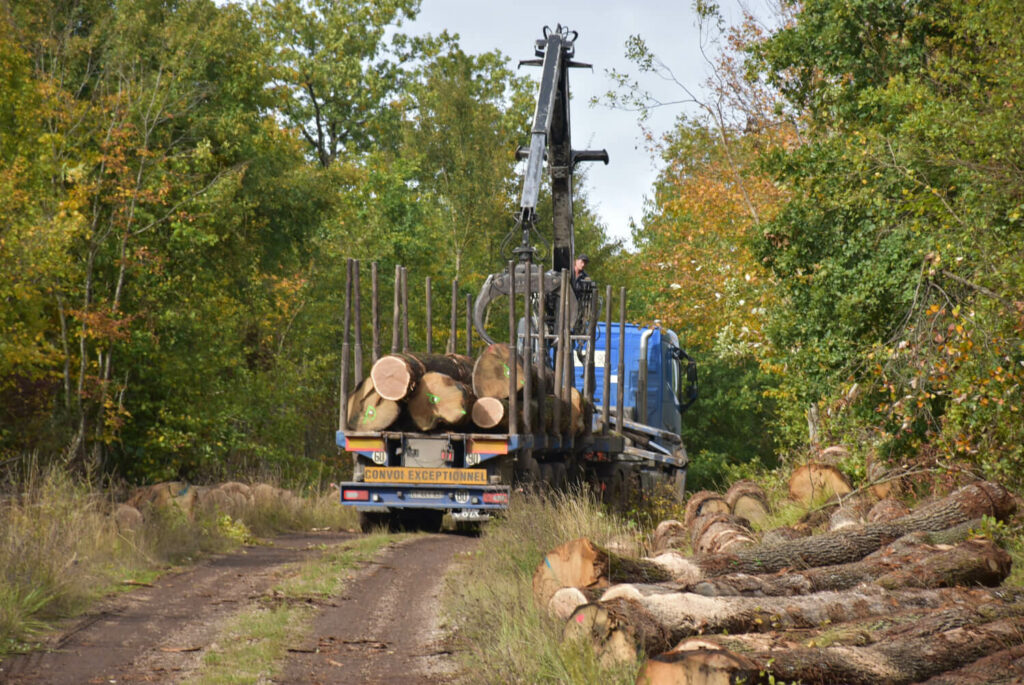
All owners, managers and operators are aware of the importance of good access to forest areas for forest management and the mobilisation of timber resources.
The droughts of previous years have also demonstrated the invaluable ally that forest roads represent for emergency vehicles in the event of a fire. France has a wealth of experience in this area, with all its «DFCI» trails.» (Defence of Forests Against Fires) created in sensitive regions over half a century ago.
Although the network of paths and roads crossing Wallonia's forests is relatively dense compared with other regions, there are still areas where there is a lack of roads suitable for today's vehicles (particularly in terms of layout and size). Other areas also require specific road improvements to manage/regulate water run-off, or even to cross watercourses. Lastly, other roads become impassable over time, due to a lack of maintenance.
It is against this backdrop that new initiatives have been taken to promote forest access in Wallonia.
Photo : Forestimator - ULG Gembloux
Practical guides
call for projects (september 2024)
The CAP's «Forestry Services» measure
In addition to direct aid to farmers, the Common Agricultural Policy (CAP) covers a range of measures for rural areas, particularly forestry. This includes support for the implementation of Natura 2000, as well as investment in the forestry and logging sectors.

A new measure has been included in the Walloon CAP 2023-2027 strategic plan. This is measure 357 entitled «investments in forestry infrastructure linked to climate change (forestry services)».
More specifically, this measure concerns investments relating to:
- «The creation of wood storage areas to avoid excessively long skidding distances (reducing the problems of compaction, etc.) and to facilitate loading in complete safety, taking care to avoid the major river beds,
- the creation of turning places to make timber loading operations easier and safer and to reduce the problems of soil compaction, erosion, run-off, etc.
- work to adapt the road network to improve erosion and flood risk management in vulnerable areas (lateral ditches, water reversals, settling ditches, etc.);
- work to adapt the service network to reduce the impact of farming activities on the soil and water, to preserve sensitive areas, for example by creating bridges and passages in wetlands.»
The budget earmarked for this measure remains fairly limited.
The call for projects was launched in September 2024 and will close on 28/02/2025. The applications to be submitted require a certain amount of expertise. Project sponsors must be owners (public or private, natural or legal persons) of woodland parcels located in Wallonia.
Projects will be selected on the basis of a set of criteria relating in particular to the sustainability of the work carried out, the number of beneficiaries concerned and the positive impact of the projects in terms of regulating run-off...
So it's a question of prioritising long-term developments with numerous collateral benefits.
Potential project applicants can find out about the application and selection procedures on the Calista platform (https://calista.wallonie.be/).
A detailed vademecum is also available to help you understand how applications should be designed and completed on the project submission platform (CALISTA).
A call for expressions of interest
In order to gauge the importance attached by Walloon forest owners/managers to improving forest access, the Cellule d'Appui à la Petite Forêt Privée (a department of Filière Bois Wallonie) and the Société Royale Forestière de Belgique thought it would be interesting to allow any forest owner/manager who so wished to fill in an online cartographic questionnaire about the improvements he/she would like to see made (paths but also associated improvements such as water crossings or wood storage areas) to facilitate forest management.
The aim of this questionnaire is therefore to assess the needs and expectations of owners/managers in terms of forest access. The number of expressions of interest from owners, the number of sections and types of development and their geographical distribution will make it possible to draw up an inventory of needs, unite the players and assess the importance to be attached to improving forest access at regional level, in particular for the next Walloon CAP strategic plan, if the «forest services» measure is maintained in it.
The data collected by this questionnaire will be analysed globally by the Société Royale Forestière de Belgique and the Cellule d'Appui à la Petite Forêt Privée (Filière Bois Wallonie), in collaboration with the University of Liège Gembloux Agro-Bio Tech (developer of the questionnaire). The information will be anonymised and will not be published. Private roads will never be visited without the prior agreement of their owners.
In addition, among the expressions of interest compiled by this questionnaire, the SRFB will analyse the possibility of assisting one or other motivated owner to submit an application for funding under the current call for projects.
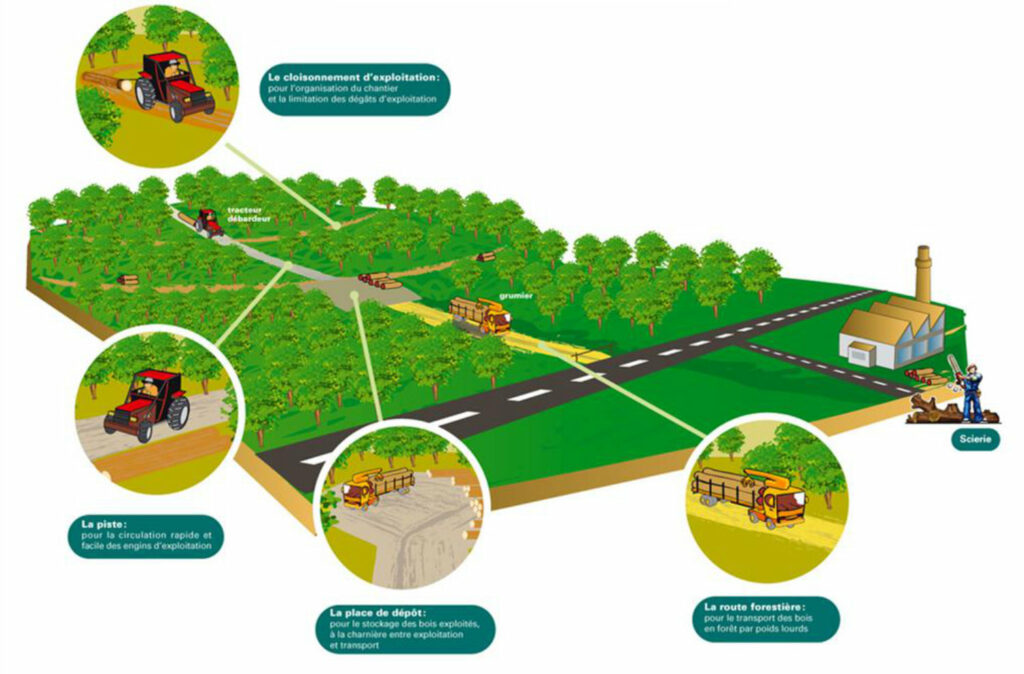
So forest access deserves a lot of attention!
Do you need help?
SRFB welcomes you to its offices in Gembloux every Friday morning in January, February and March, from 9am to 12pm, to help you fill in the CALISTA form. The more complete your application, the more likely it is to be accepted by the authorities.
Point of contact
Louanne Collin, who is responsible for the «services» dossier, will make an appointment with interested parties once the dossiers have been analysed.