This Wednesday 19 August 2026, we dedicated a day to larch silviculture.
This female one gathered 25 participants, forest owners and managers.

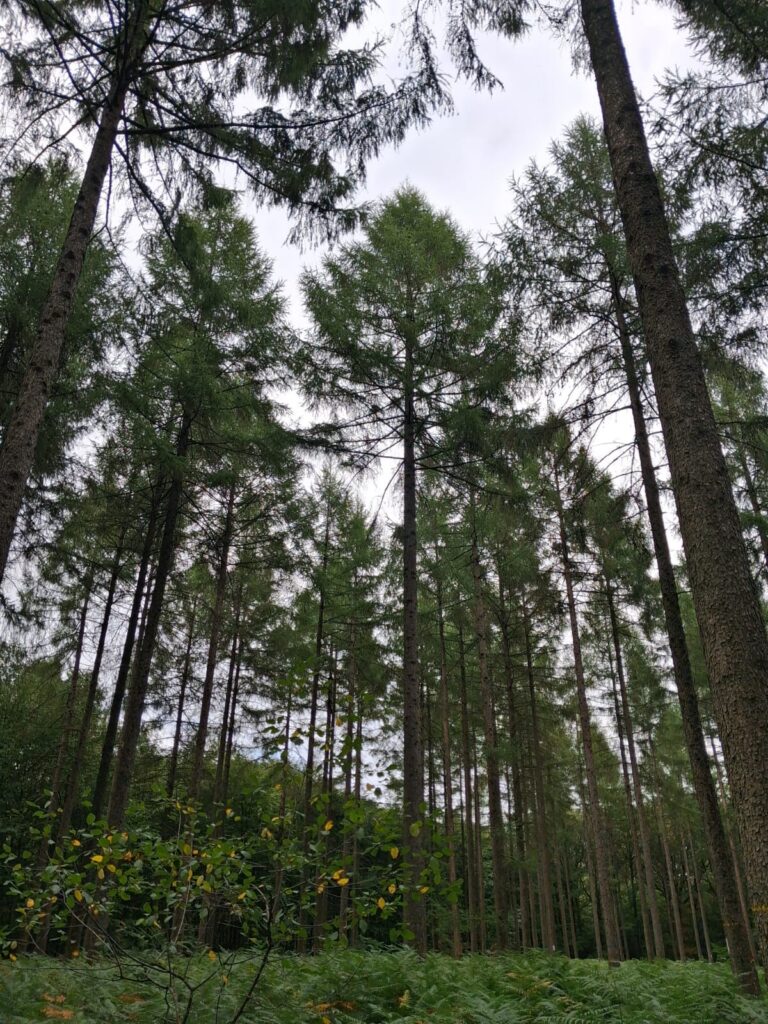
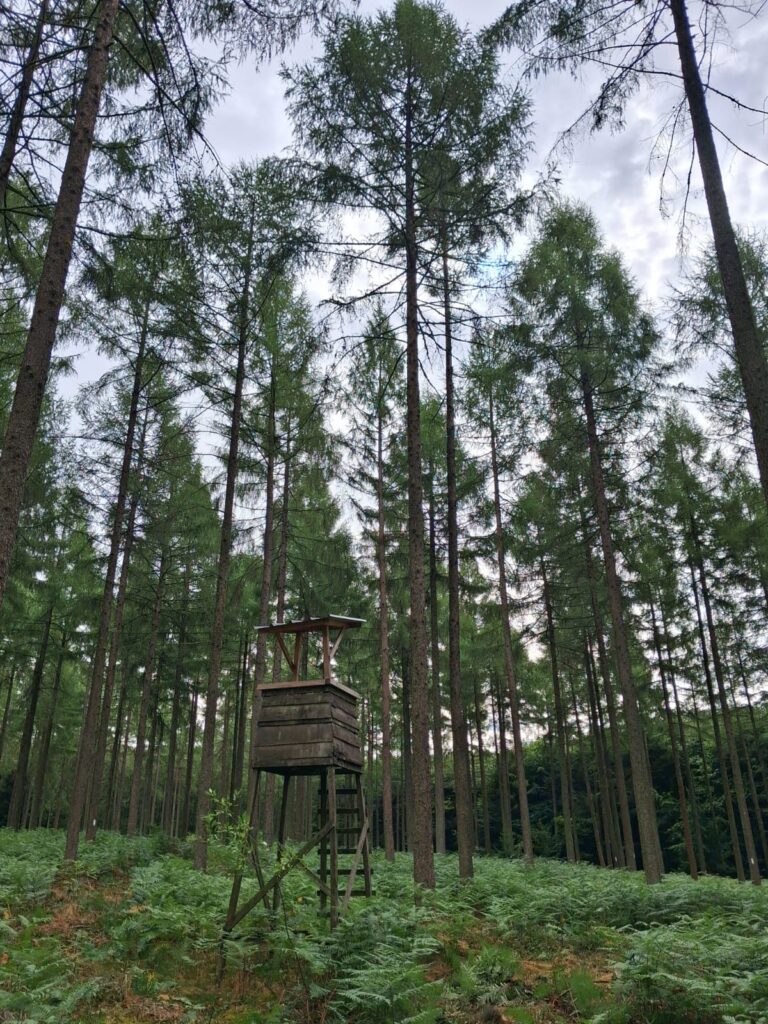
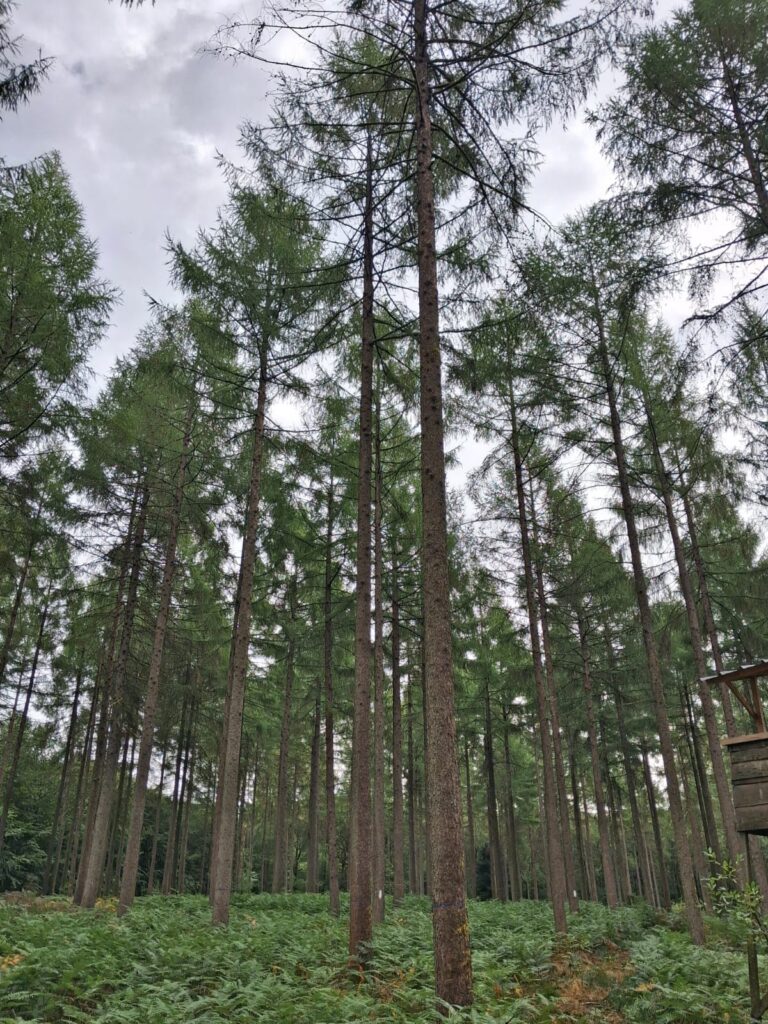
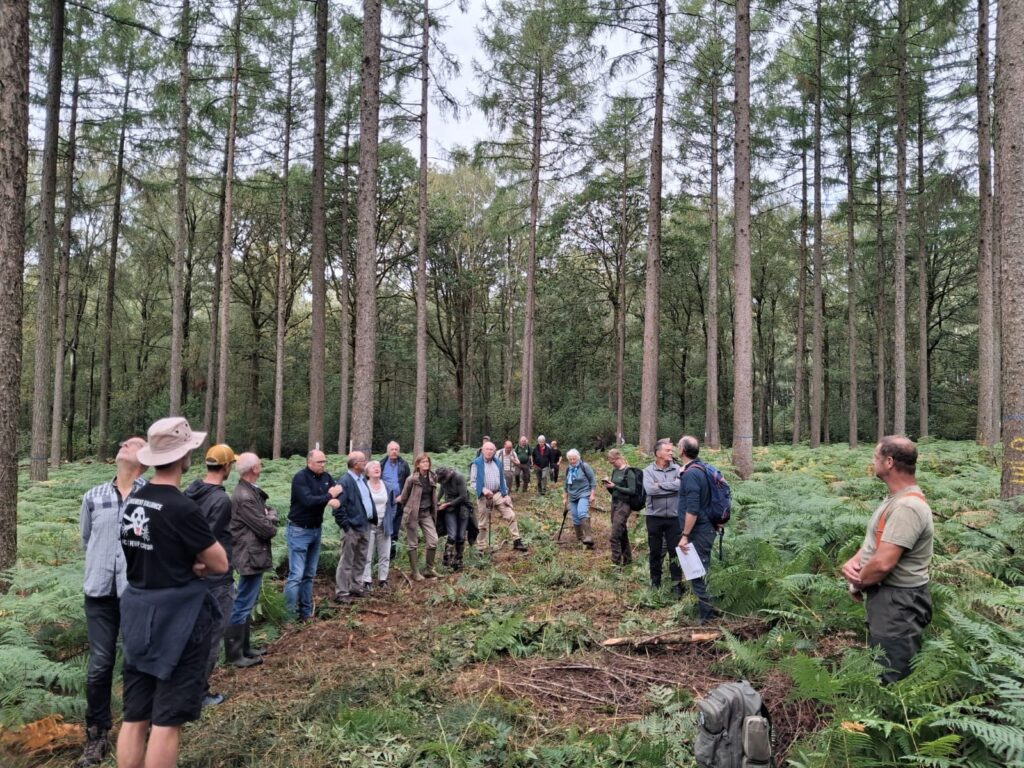
Morning: stand management and thinning methods
To this end, we visited one of the thinning trials monitored by the University of Liège (Gembloux Agro-Bio Tech). Professor Hugues Claessens presented the results of this study comparing different thinning intensities and strategies.
The afternoon: different establishment strategies for larch stands.
While planting (with rather wide spacing) remains a reliable method in the absence of seed trees, the regeneration of this pioneer species is often abundant near parent stands, and targeted work within this regeneration is essential to make the most of it. During the afternoon, participants were able to practise this targeted work (snapping, pre-commercial thinning) in a mixed regeneration (larch, spruce, birch, Scots pine, rowan).
The lessons to be learnt from today
Larches are pioneer species with very strong but short-lived early growth, so advantage should be taken of this vigorous youth so that dominant trees properly establish their position in the stand by carrying out early thinnings (around 10 years if planted at 2,000 stems per ha, around 15 years if planted at 1,100 stems per ha), which are heavy and frequent (every 3 years) while maintaining a basal area after thinning close to 18 m²/ha. After 30 years, growth slows down and thinnings can be spaced out a little more.
| Early bright spells | Around 10 years (planting at 2,000 stems/ha) Around 15 years old (planting at 1100 stems/ha) |
| Frequency | Every 3 years |
| Target back-of-house area | ~18 m²/ha after thinning |
| Slowdown in growth | After 30 years, you can space out the thinnings a bit more. |
The objective tree method is also an interesting possibility. Regarding natural regeneration, if it is dense, extensive and dominated by larch, early thinning should be carried out (when the stems are about 3m tall); if it is mixed, the larch easily dominates the other species and the work can be very targeted to favour the best stem every 4-5m.
A guide to larch silviculture is currently being prepared by the University of Liège team.
The differences between the three larches were also discussed.
The Japanese larch and the hybrid larch have higher water requirements than the European larch. The first two should therefore be reserved for sites with soils well supplied with water (but with adequate drainage) and preferably on north-facing slopes to limit evapotranspiration.
In terms of growth, the hybrid larch It grows to a height approximately 15% greater than its parent species; however, this exceptional growth may prove to be a disadvantage in wind-exposed locations, where the plant may lodge and therefore require staking during the first few years, which represents an investment that may somewhat reduce profitability.
The European larch while not a dry-soil species, it tolerates a slightly drier moisture level than the other two.
| Species | Water requirements | Recommended Station |
|---|---|---|
| Japanese larch | Raised | Well-watered soils + proper drainage North-facing slopes (to limit evapotranspiration) |
| Hybrid larch | Raised | Well-watered soils + proper drainage North-facing slopes (to limit evapotranspiration) |
| European larch | Moderates | Supports slightly drier moisture levels |